

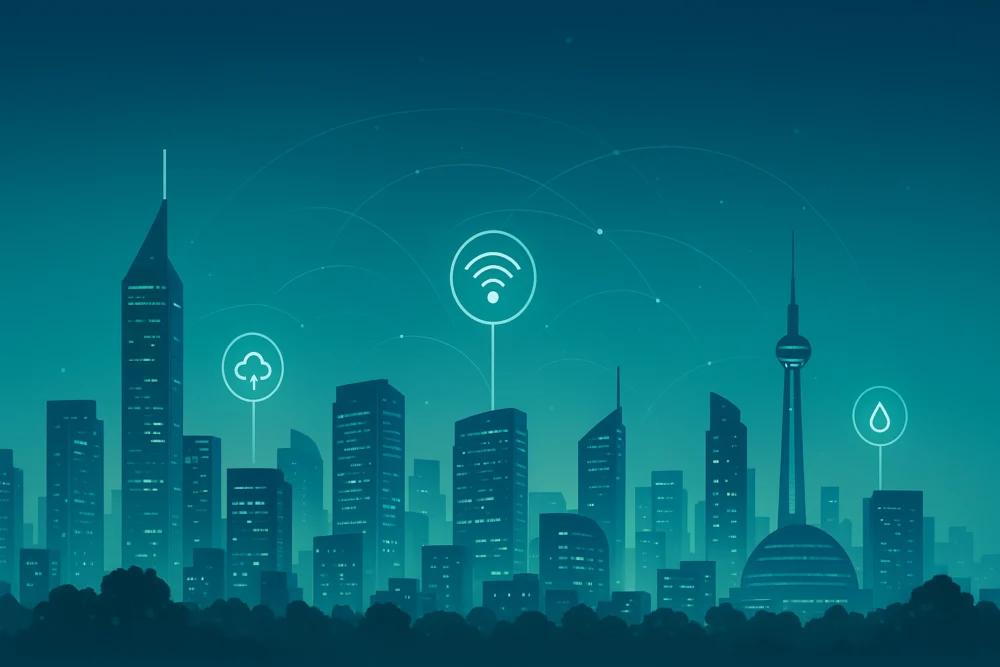
JustUpdateOnline.com – As Asian metropolitan areas prepare for a massive population surge, the integration of advanced network technology is emerging as a critical tool for environmental preservation. With the region’s urban population expected to swell by an additional 1.2 billion residents by mid-century, the strain on energy, housing, and transport systems has reached a tipping point, necessitating a digital revolution in urban management.
Modern cities are currently responsible for roughly 70% of global carbon output and three-quarters of the world’s total energy usage. In Asia, this rapid expansion poses significant risks, including rising temperatures and extreme flooding, which could threaten the safety of nearly a billion urban residents by 2030. To address these challenges, a synergy between public policy and private innovation is focusing on digital infrastructure to optimize how resources are consumed.
The Rise of the "Fourth Utility"
Experts now view reliable, high-speed connectivity as a "fourth utility," as essential to modern life as water, gas, and electricity. By utilizing sophisticated sensors and wireless networks, city administrators and enterprise leaders can access precise, real-time data regarding energy consumption. This transparency allows for the transformation of traditional buildings into "green" structures that adjust their power usage based on actual demand rather than static schedules.
Revolutionizing Industrial Efficiency
Asia’s massive manufacturing and logistics sectors are primary contributors to greenhouse gases, but digitalization offers a path toward a smaller carbon footprint. In warehouses and factories, intelligent Wi-Fi and IoT sensors enable predictive maintenance. This proactive approach can slash equipment breakdowns by up to 70% and lower upkeep costs by a quarter.
Furthermore, smart climate control systems now adjust airflow and temperature based on occupancy. In dynamic industrial environments, these automated adjustments ensure that automated machinery and human workers have the connectivity they need without wasting electricity on unused spaces.
AI-Driven Urban Management
Managing the complex web of modern urban life—from hospitals and schools to massive shopping centers—has become too intricate for manual oversight alone. Artificial Intelligence (AI) is now being deployed to oversee diverse network protocols, including private 5G and Bluetooth, to manage energy-intensive facilities.
For example, in Vietnam, large-scale retail centers have successfully cut total energy consumption by monitoring chiller and lighting systems in real-time. Similarly, AI-managed networks can automate "policy control," ensuring that power-hungry systems are only active when necessary, which is far more efficient than relying on human intervention.
Conserving Vital Resources
Conservation efforts are also extending to vital resources like water and waste management. Smart sensors in Singapore and Australia are being integrated into distribution networks to detect minute leaks that could otherwise waste thousands of liters annually.
In the realm of sanitation, countries like South Korea and India are moving away from rigid, scheduled trash collection. By using IoT-enabled waste bins that report their fill levels in real-time, cities can optimize collection routes, reducing fuel consumption and preventing the overflow of refuse in crowded areas.
The Path Forward
The transition toward "smart" urbanism is no longer just a technological ambition; it is a necessity for a sustainable future. As corporate and governmental leaders prioritize environmental, social, and governance (ESG) goals, the strength and resilience of wireless networks will serve as the foundation for Asia’s green transition. By leveraging AI and robust connectivity, the region can continue to grow economically while significantly reducing its ecological impact.