

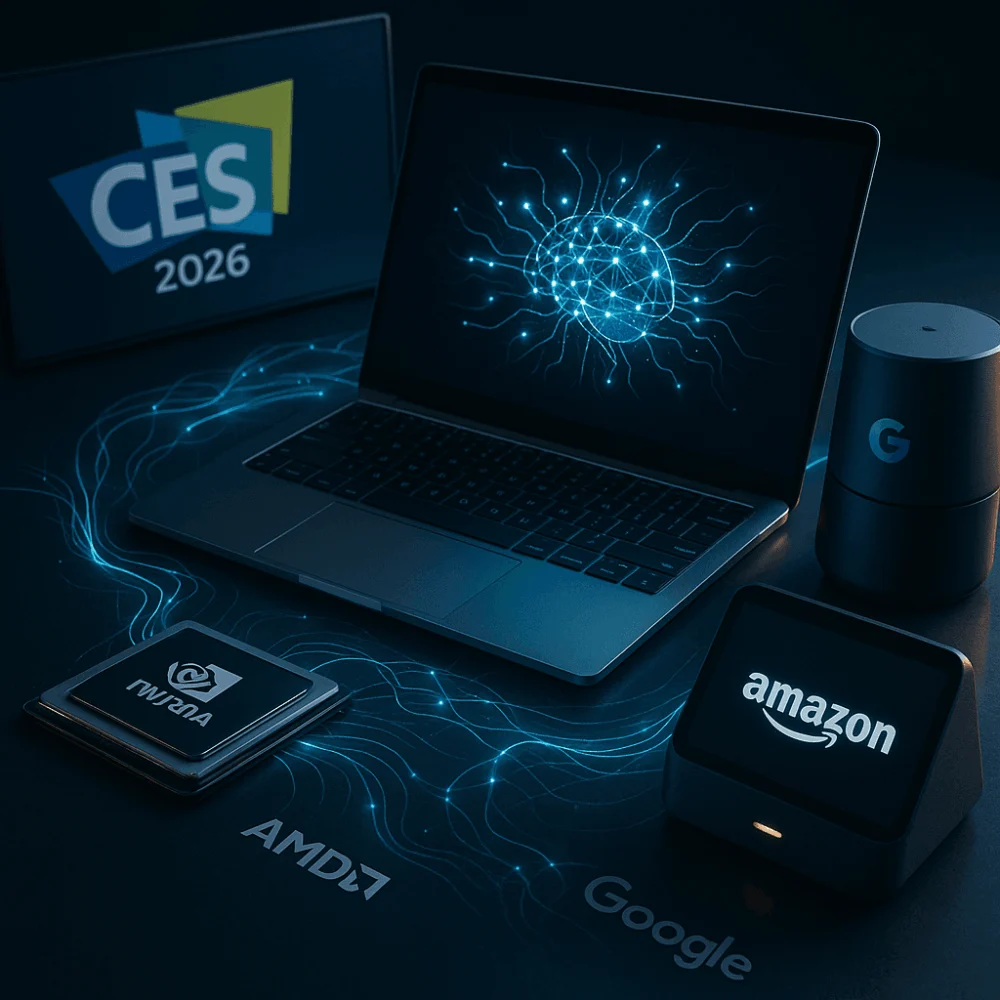
JustUpdateOnline.com – As the technology industry prepares for the upcoming CES 2026, the spotlight is firmly fixed on a shift toward hardware designed specifically for an AI-centric world. Industry giants Nvidia, AMD, and Amazon are reportedly positioning themselves at the forefront of this movement, signaling a new era where silicon and consumer electronics are built from the ground up to support advanced machine learning and generative applications.
The upcoming trade show is expected to serve as a pivotal moment for the hardware sector. For years, artificial intelligence was primarily a software-driven phenomenon, but the narrative is changing. At CES 2026, the focus will transition to the physical infrastructure required to run these intensive programs locally on devices, rather than relying solely on cloud-based processing.
Nvidia’s Continued GPU Dominance
Nvidia is anticipated to showcase its latest advancements in graphics processing units (GPUs) that prioritize neural processing efficiency. By refining their architecture to handle massive datasets with lower power consumption, the company aims to maintain its stronghold on the AI market. Analysts expect Nvidia to unveil consumer-grade hardware that brings enterprise-level AI capabilities to home workstations and gaming setups, further blurring the line between professional and personal computing.
AMD’s Competitive AI Integration
Not to be outdone, AMD is gearing up to present its next generation of processors. The company has been aggressively integrating AI engines into its CPU and GPU lineups, and CES 2026 is likely where they will demonstrate the full potential of these "Ryzen AI" developments. By focusing on versatile hardware that caters to both the laptop market and high-end data centers, AMD is positioning itself as a flexible alternative for manufacturers looking to embed smart features directly into their product lines.
Amazon’s Expansion into Custom Silicon
Amazon’s involvement marks a significant expansion of its hardware ambitions. Beyond its traditional consumer electronics, the company is expected to highlight its progress in custom silicon designed to power the next generation of smart homes and logistics. By developing in-house chips optimized for its specific ecosystem, Amazon aims to reduce latency and improve the responsiveness of its AI-driven services, creating a more seamless experience for users across its various platforms.
The Broader Impact on the Tech Industry
The collective push by these three titans suggests that "AI-first" is no longer just a marketing buzzword but a fundamental design philosophy. For the average consumer, this means faster devices, more intuitive interfaces, and the ability to run sophisticated AI tools without a constant internet connection.
As CES 2026 approaches, the global tech community remains watchful. The innovations showcased by Nvidia, AMD, and Amazon will likely set the tone for the remainder of the decade, defining how we interact with technology in an increasingly automated world.