

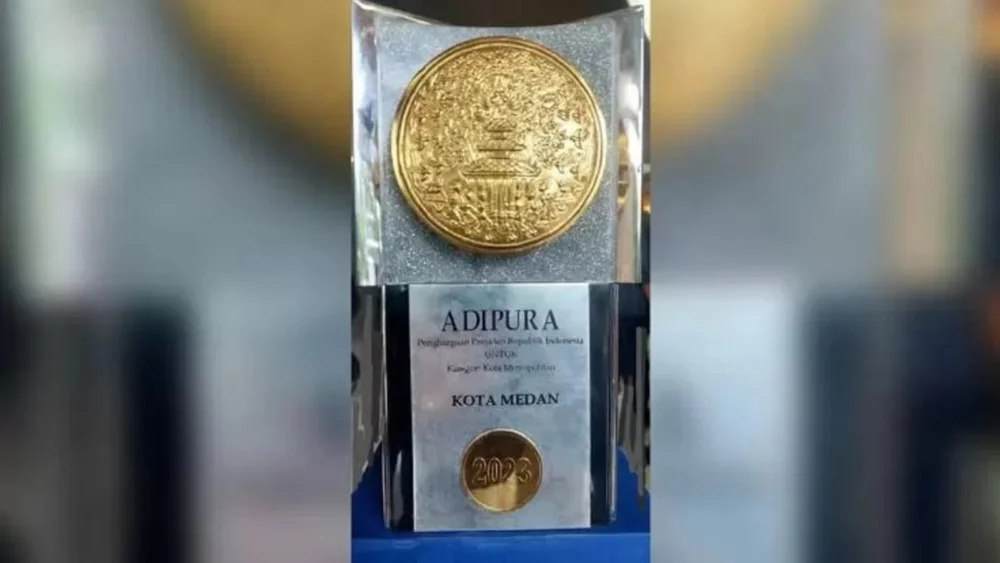
JustUpdateOnline.com – Jakarta, The Ministry of Environment has revealed that no Indonesian municipality or regency managed to secure the prestigious Adipura Kencana, or "Cleanest City" title, during the 2025 evaluation cycle.
Environment Minister Hanif Faisol Nurifiq stated that, for the current year, no region met the rigorous benchmarks required for the nation’s highest environmental and urban cleanliness honor. The 2025 assessment criteria underwent a significant shift, prioritizing comprehensive waste management that covers everything from city centers to the most remote outskirts.
While the Adipura awards traditionally recognize excellence in sanitation and environmental preservation, the Minister noted a lack of consistency in this year’s candidates. He explained that many cities maintain a polished appearance in their central business districts but fail to manage waste effectively in residential or peripheral zones.
"When we inspected Surabaya, the heart of the city was immaculate. However, the outskirts still require substantial improvement," Minister Hanif remarked during a National Waste Management Coordination Meeting in South Jakarta on Wednesday. He cited a similar pattern in Balikpapan, where cleanliness was evident on main roads but vanished just 200 meters into the surrounding neighborhoods. Due to these discrepancies, the Ministry determined that no city was currently eligible for the "Cleanest City" status.
Former Champions Experience a Downgrade
This year’s strict evaluation led to a decline in status for several perennial winners. Cities such as Surabaya, Balikpapan, Bontang, Bitung, and the Ciamis Regency—all previous Adipura Kencana holders—failed to retain their top-tier ranking.
Instead of the gold standard, only 35 regencies and cities were awarded the "Certificate Towards a Clean City" (Sertifikat Menuju Kota Bersih). Surabaya, Balikpapan, and Ciamis led the group in the top three positions, followed by Banjar and Bontang in fourth and fifth place, respectively. The remaining spots in the top ten were filled by Parepare, Malang, Padang, Sidoarjo, and Bone.
In contrast, the Ministry highlighted a concerning trend where over 120 regions were categorized as "Very Dirty" due to a lack of administrative focus and insufficient funding for waste infrastructure. An additional 253 regions were labeled as "Dirty."
The Fight Against Open Dumping
A critical factor in this year’s assessment was the continued use of "open dumping" at landfills (TPA). Minister Hanif reported that while the practice has decreased from a previous high of 95%, approximately 66% of landfills—roughly 325 sites—still utilize this environmentally damaging method.
"Our objective is to completely eliminate open dumping across the country by 2026," Hanif declared. He identified 44 specific landfills that have the most significant negative impact on the environment, including the well-known Bantargebang site in Bekasi and TPA Suwung in Bali.
The Minister emphasized that while the 2026 target is ambitious, it remains achievable. He noted that local governments are now under heightened scrutiny from the Ministry’s law enforcement division to ensure a rapid transition toward modern, sustainable waste processing.