

JustUpdateOnline.com – KUALA LUMPUR, Malaysia is witnessing a dramatic transformation in its legal landscape, as the nation’s courtrooms see an unprecedented influx of both civil and criminal filings. Recent data reveals that legal disputes have climbed by approximately 60%, signaling a shift in how Malaysians address personal and professional grievances.
From Beauty Brushes to Legal Briefs
The trend is exemplified by individuals like Nurul Nashua Baharuddin, a 33-year-old makeup artist from Johor. After over a decade in the beauty industry, Nurul recently pivoted from her professional craft to legal research. Disturbed by what she describes as defamatory remarks from a photographer that cost her several clients, she has initiated legal action.
“When my reputation and livelihood are at stake, I have no choice but to act,” Nurul explained. While she acknowledges that litigation is expensive and time-consuming, she views the legal system as her only path to accountability. Her situation reflects a growing segment of the population that is increasingly willing to take disputes to the bench.
The Numbers Behind the Surge
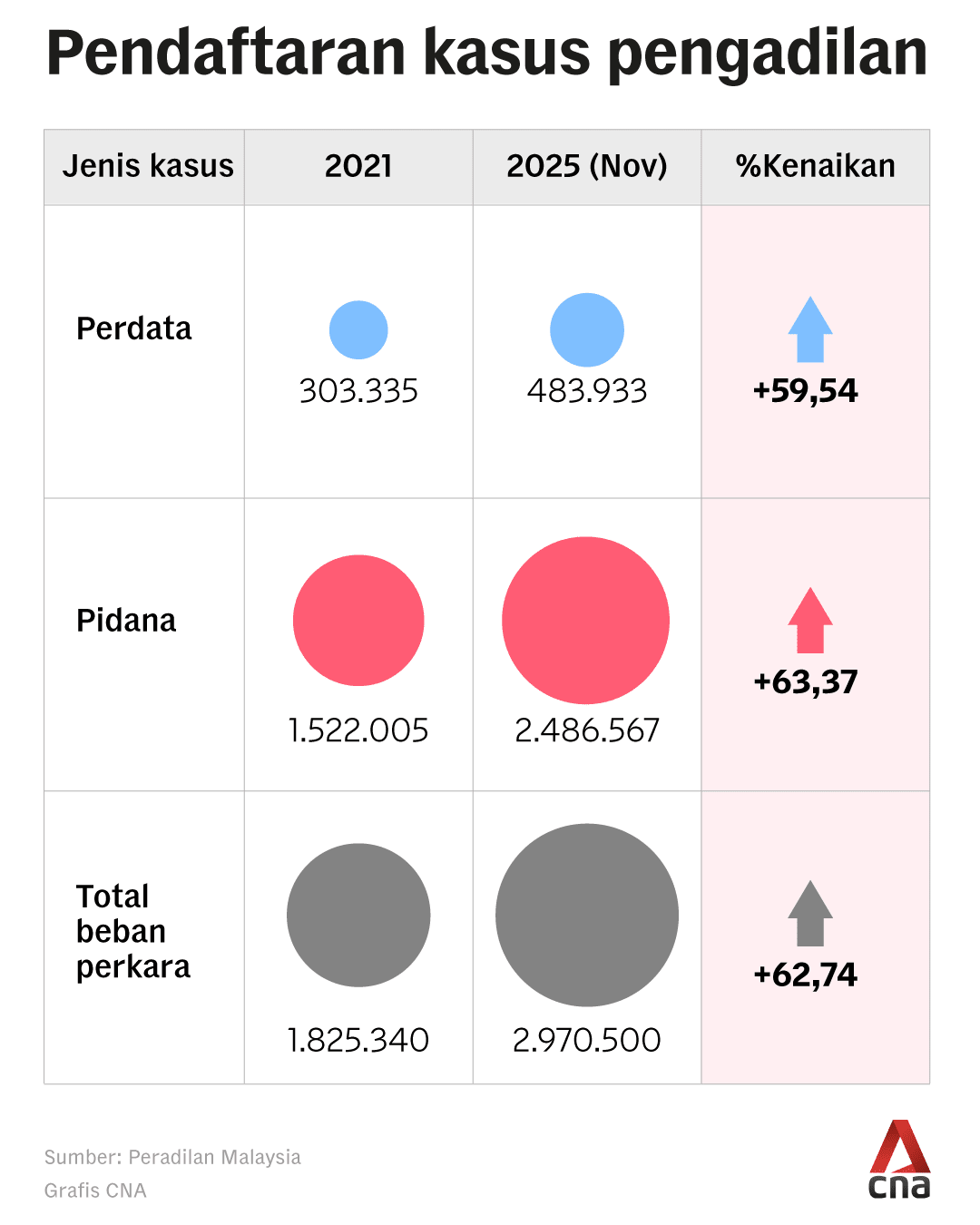
During the opening of the 2024 legal year, Chief Justice Wan Ahmad Farid Wan Salleh highlighted a staggering rise in court registrations. Between 2021 and late 2025, civil case filings jumped from 303,335 to 483,933—an increase of nearly 60%. Criminal filings saw an even sharper rise, growing by over 63% to reach nearly 2.5 million cases.
The Chief Justice noted that these figures are not a temporary spike but represent a structural shift in society. He suggested that a more litigious public indicates a high level of trust in the country’s judicial institutions.
Why Are Malaysians Suing More?
Legal experts attribute this boom to several factors, including heightened public awareness and economic evolution. Former Court of Appeal Judge Mah Weng Kwai noted that as education levels rise, citizens become more cognizant of their statutory rights. Rather than resolving conflicts through informal means, they are turning to the courtroom.
Furthermore, the Malaysian Bar President, Ezri Abdul Wahab, pointed out that the diversification of the economy—specifically in fintech, digital commerce, and international trade—has made contractual relationships more intricate. This complexity naturally leads to more frequent legal disagreements. Economic pressures, such as bankruptcy and employment disputes following periods of financial instability, have also fueled the litigation fire.
A System Strained to the Limit
Despite the massive increase in filings, the number of presiding judges has remained largely stagnant. This imbalance has created significant bottlenecks. Chief Justice Wan Ahmad warned that the current workload is placing "immense and growing pressure" on the judiciary, necessitating an urgent increase in personnel.
Retired judge Mah Weng Kwai shared that the work often extends far beyond court hours. Judges frequently spend their nights and weekends drafting written judgments to meet strict eight-week deadlines for appeals. He noted that the sheer volume of legal submissions—some spanning hundreds of pages—requires significant time to process.
The Rise in Criminal Proceedings
The surge isn’t limited to private lawsuits. Criminal case registrations have also spiked, driven by socio-economic challenges. Malaysia’s crime index rose by 11.1% in 2024, with property-related offenses and drug-related cases seeing double-digit growth.
Criminologists suggest that poverty, unemployment, and the lure of quick financial gain through illegal activities like drug trafficking are major contributors. This influx of criminal cases not only clogs the system but also has humanitarian implications, as those accused of non-bailable offenses may spend years in detention awaiting a verdict.

Seeking a Sustainable Solution
To address the backlog, legal professionals are calling for a multi-pronged approach:
- Judicial Expansion: Hiring more judges and support staff to match the case volume.
- Alternative Dispute Resolution: Encouraging mediation and negotiation to resolve conflicts outside of court, which is often faster and more cost-effective.
- Contract Judges: Appointing experienced senior lawyers to serve as temporary judges specifically for commercial backlogs.
- Professional Ethics: Ensuring lawyers provide honest advice to clients to prevent frivolous lawsuits that lack merit.
As the nation grapples with this legal "tsunami," the focus remains on ensuring that the pursuit of justice remains accessible, efficient, and fair for every citizen.