

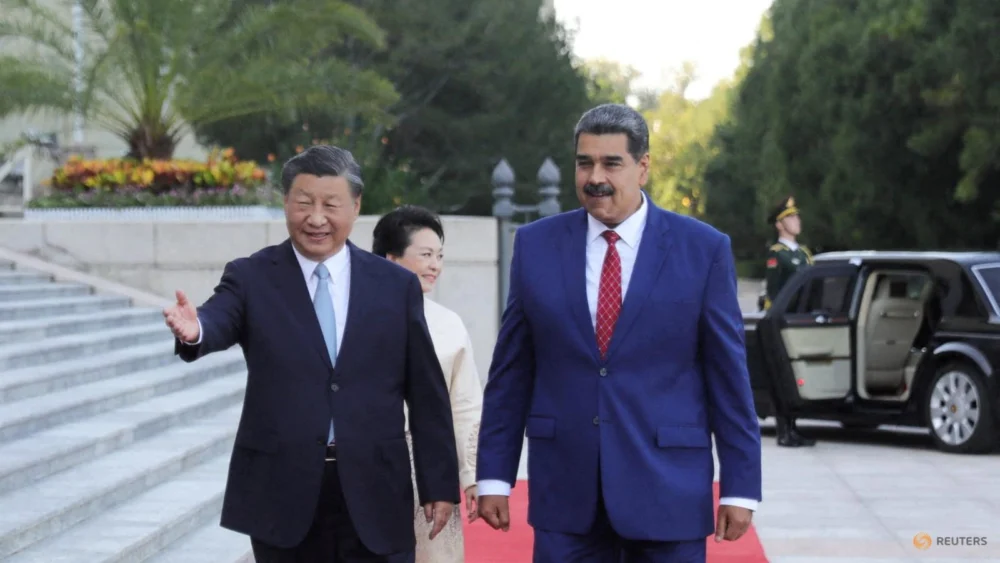
JustUpdateOnline.com – The recent high-stakes military and law enforcement operation by the United States in Venezuela has sent shockwaves through the global community, but no nation appears more vulnerable to the resulting instability than China. While the arrest of President Nicolas Maduro marks a seismic shift in Latin American politics, analysts suggest that Beijing stands to lose the most in terms of financial investments, energy security, and strategic influence.
A Sudden Shift in Caracas
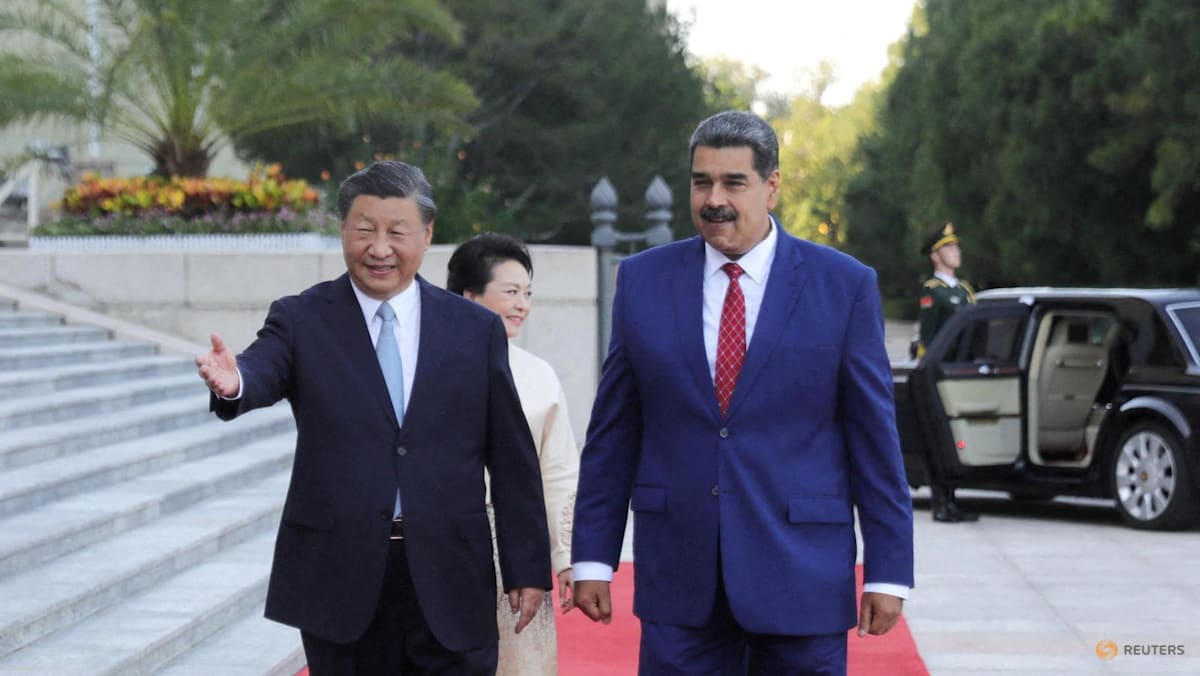
In a swift, pre-dawn operation conducted on January 3, elite American forces entered Caracas to take President Maduro and his wife, Cilia Flores, into custody. The mission was supported by targeted airstrikes across the capital. Maduro, who faces federal charges in the United States involving narco-terrorism and cocaine trafficking conspiracy, recently appeared in a New York courtroom where he maintained his innocence.
While Washington has characterized the move as a targeted law enforcement action rather than a traditional military invasion, the removal of a sitting head of state has drawn sharp criticism from Beijing. Chinese officials have labeled the operation a "clear violation of international law" and are demanding the immediate release of the Venezuelan leader.
Billions in Investments at Risk
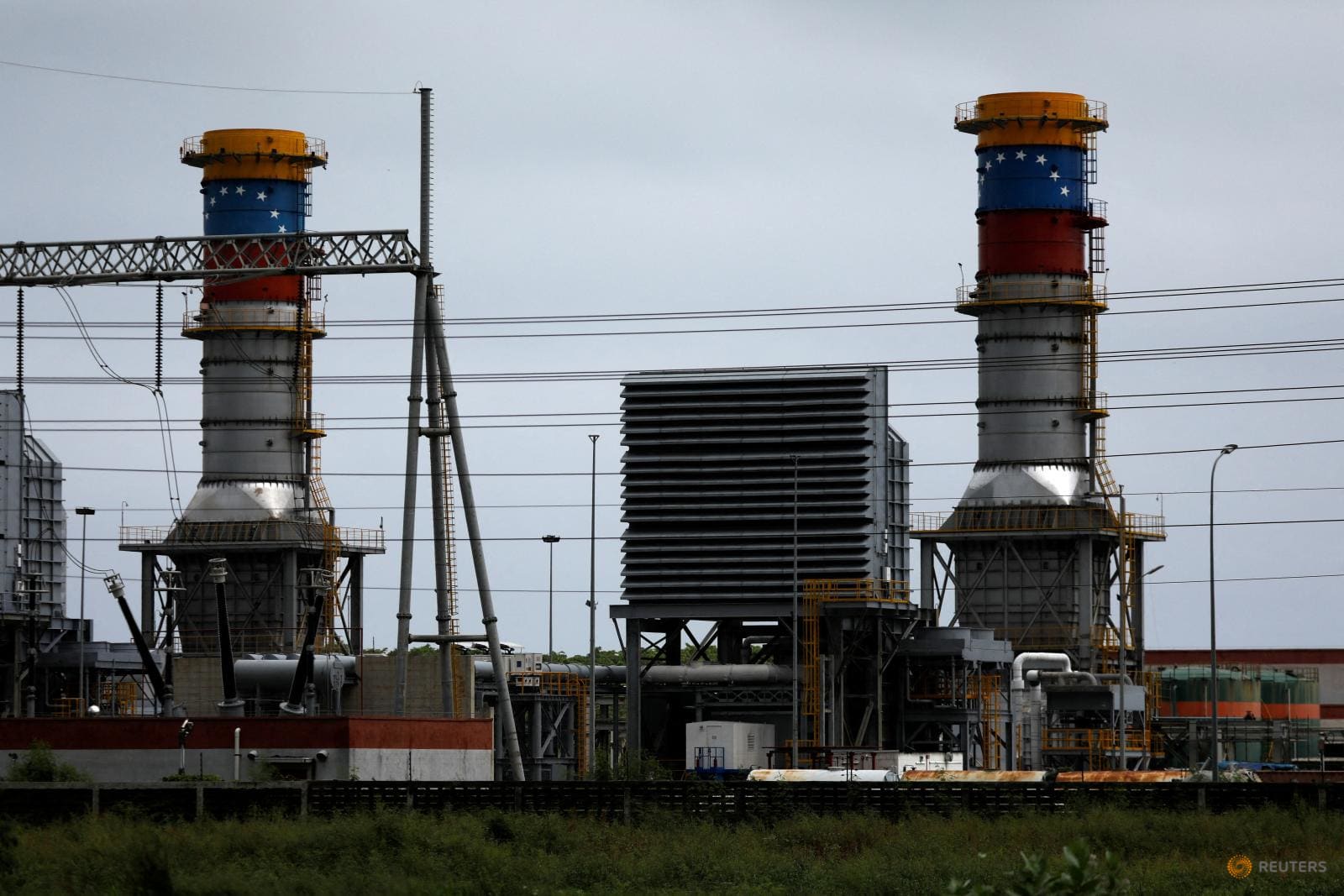
China’s concern is rooted in deep financial ties. According to data from the Center for Strategic and International Studies (CSIS), Venezuela has been the primary recipient of Chinese capital in Latin America, securing over $62 billion in loans since 2007. This represents more than half of all Chinese lending to the entire region.
This partnership flourished under the late Hugo Chavez and continued under Maduro, with Venezuela pledging vast quantities of crude oil to repay its massive debts. Currently, China remains the top purchaser of Venezuelan oil, absorbing approximately 80% of the country’s exports. However, with the U.S. now signaling its intent to "manage" Venezuela’s oil reserves, the future of these debt-repayment deliveries is highly uncertain.
The Currency Battle and Regional Influence
Beyond direct financial losses, the U.S. intervention strikes at the heart of China’s broader economic ambitions. Venezuela had become a testing ground for the internationalization of the Yuan, pricing its oil in the Chinese currency to bypass the U.S. dollar. Experts suggest that the collapse of the Maduro administration could set back China’s "de-dollarization" efforts by years.
Furthermore, the move reasserts American dominance in the Western Hemisphere. The "Trump Corollary"—a modern extension of the Monroe Doctrine—explicitly aims to prevent "non-hemispheric competitors" like China from controlling strategic assets in the Americas. This creates a dilemma for other Latin American nations involved in China’s Belt and Road Initiative, forcing them to weigh the benefits of Chinese investment against the risks of U.S. friction.
Implications for the Taiwan Strait
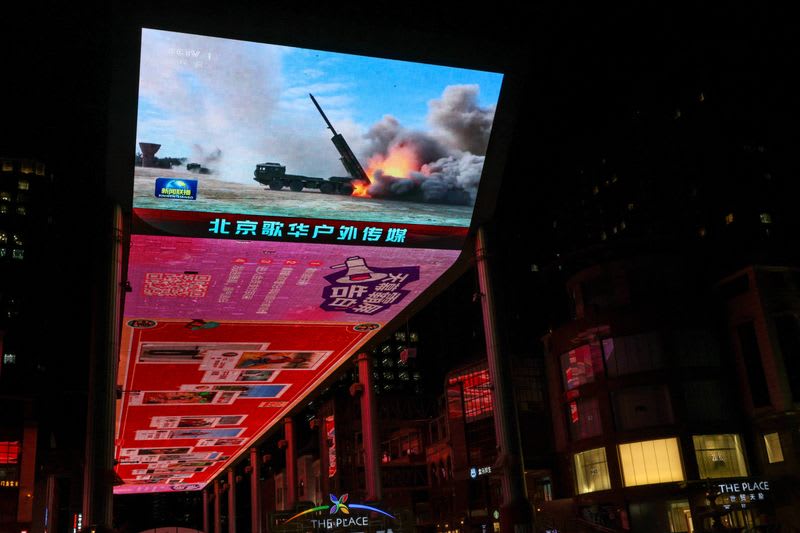
The events in Caracas have also sparked intense discussion regarding China’s strategy toward Taiwan. Following the U.S. raid, some nationalist voices in China have called for similar decisive action against the leadership in Taipei.
However, many political analysts argue that the two situations are fundamentally different. Taiwan’s critical role in the global semiconductor supply chain and its status as a major U.S. security partner make it a far more volatile flashpoint. While the U.S. success in Venezuela might offer a template for rapid intervention, Beijing must move cautiously to avoid a military escalation that could trigger a much larger global conflict.
Strategic Resources and Data Control
The struggle for Venezuela also extends to the minerals of the future. While Venezuela is known for having the world’s largest proven oil reserves, it also possesses significant deposits of gold, coltan, and potentially rare earth elements.
Control over these resources is a major strategic priority. Interestingly, China may still hold a unique advantage: the state-owned firm CITIC reportedly conducted the only comprehensive geological survey of Venezuela’s mineral wealth in 2012. As the U.S. moves to stabilize the country, the proprietary data held by Beijing regarding Venezuela’s underground resources remains a critical piece of the geopolitical puzzle.
As the situation evolves, Beijing faces a difficult balancing act. It can either double down on its role as an alternative to Western influence or retreat to protect its remaining economic interests in an increasingly assertive "American backyard."
