

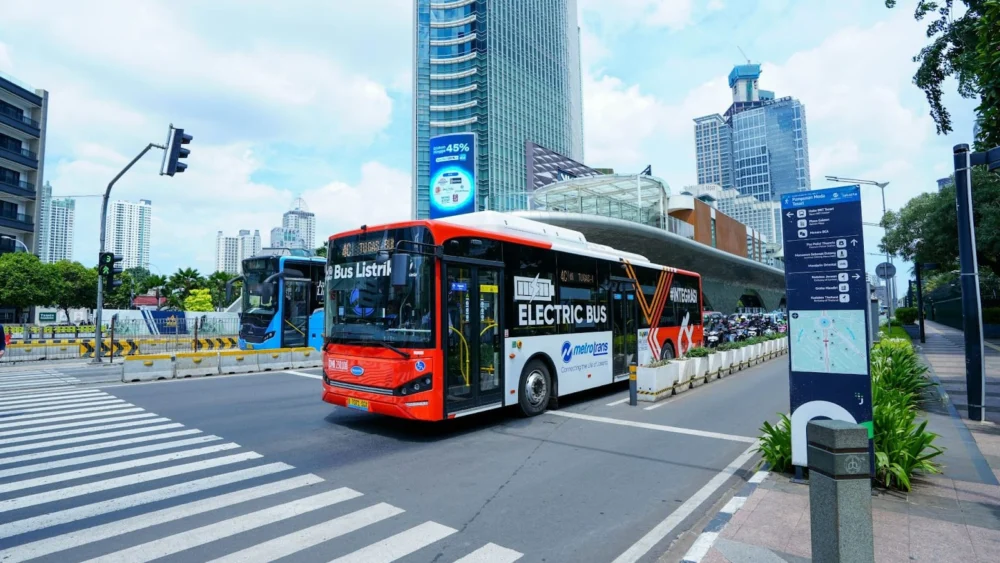
JustUpdateOnline.com – Jakarta, The planned increase for Transjakarta fares, which was expected to rise from Rp3,500 to Rp5,000, has been officially put on hold. The Jakarta Provincial Government decided to maintain current pricing to ensure citizens can afford essential transportation during a period of economic uncertainty.
This postponement was not a solitary move by the regional administration but followed a specific recommendation from the central government. Authorities expressed that the current financial climate is not suitable for a fare hike. Nirwono Yoga, a Special Staff member for the Jakarta Governor focusing on Urban Development, highlighted during a recent discussion that the socio-economic status of the population necessitates a cautious approach to public service costs.
"The decision to delay the price adjustment was influenced by the central government’s assessment of the current economic atmosphere, which is considered less than ideal," Nirwono explained on Thursday (Jan 8). He noted that the duration of this delay remains dependent on future national policy shifts.
Despite the freeze on ticket prices, the transportation system faces significant fiscal challenges. The 2026 budget allocation for Transjakarta subsidies has been set at Rp3.7 trillion, a decrease from the Rp4.1 trillion realized in 2025. However, experts estimate that nearly Rp4.8 trillion is required to sustain the same level of service quality and operational standards. This funding gap is largely attributed to a reduction in financial transfers from the central government to regional coffers.
Nirwono warned that with only Rp3.7 trillion available, the city would face a difficult choice: either reduce the quality of service or risk a total operational halt before the year ends. To prevent such a scenario, the Jakarta Provincial Government plans to bridge the Rp1.1 trillion deficit through the Revised Regional Budget (APBD-P), which will be negotiated in the middle of the year.
The goal of this budgetary strategy is to ensure that Transjakarta continues to function at full capacity through the end of 2026 without placing an extra financial burden on passengers.
In response to these challenges, the Jakarta City Transportation Council (DTKJ) has urged the government to maintain service excellence. Adrianus Satrio Adi Nugroho, Secretary of the DTKJ, described the current situation as a dilemma. While the reduction in subsidies poses a threat to sustainability, he emphasized that public transport must continue to meet its obligations to the community without compromising on safety or reliability. The council suggested that the government focus on optimizing non-farebox revenue—income generated from sources other than ticket sales—to help stabilize the network’s finances.
