

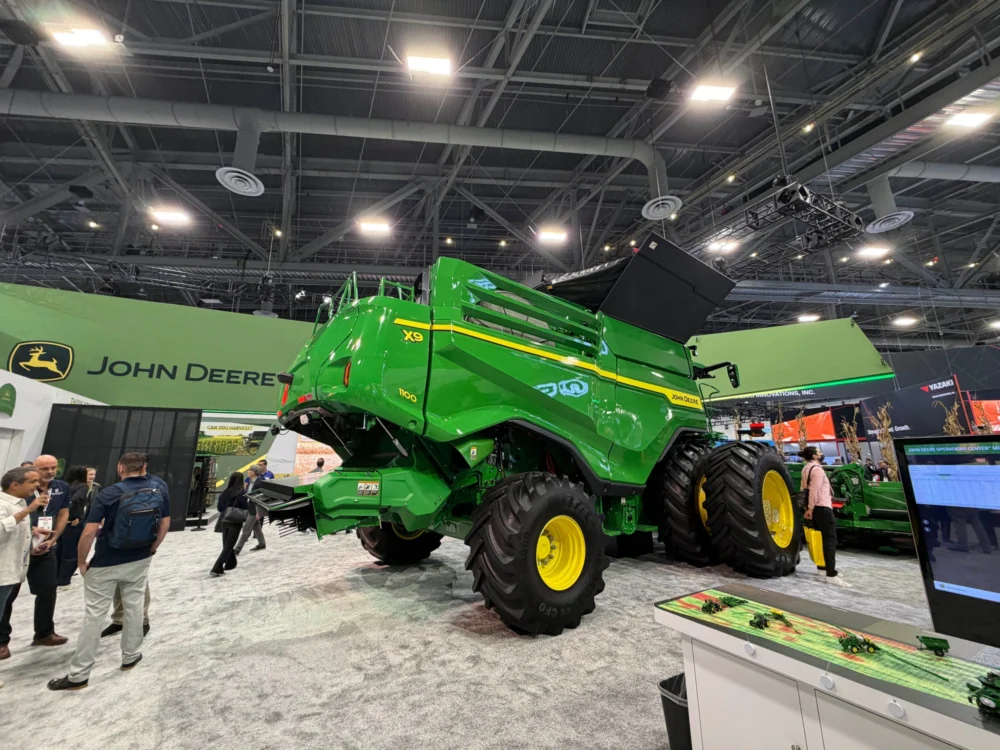
JustUpdateOnline.com – As global food demand rises and labor availability fluctuates, John Deere is positioning itself as a technology leader rather than just a traditional equipment manufacturer. At the heart of this shift is the company’s ambitious push into full farm autonomy, a journey led by key executives like Deanna Kovar, who oversees the brand’s agricultural and turf divisions.
The transition toward driverless machinery represents a fundamental change in how the agricultural sector operates. Rather than simply building larger tractors, the focus has shifted toward the "autonomous stack"—a sophisticated ecosystem of integrated hardware and software that allows heavy machinery to perceive, think, and act independently in a field environment.
According to Kovar, the objective is to provide farmers with the ability to do more with less. By utilizing advanced sensors, GPS mapping, and artificial intelligence, John Deere’s autonomous systems can manage complex tasks like tilling and planting with surgical precision. This technology is designed to solve one of the industry’s biggest hurdles: the shrinking pool of skilled operators.
The technological architecture behind these machines involves a multi-layered approach. High-resolution cameras and machine-learning algorithms work in tandem to detect obstacles and navigate uneven terrain. This "vision system" is constantly processed by onboard computers that make split-second decisions, ensuring the tractor remains on its path while maintaining the safety of the surrounding environment.
Furthermore, the integration of these systems allows for remote monitoring via mobile applications. Farmers can now oversee an entire fleet of autonomous vehicles from their smartphones, receiving real-time data on performance, fuel levels, and soil conditions. This level of connectivity transforms the tractor from a mechanical tool into a data-gathering hub.
As John Deere continues to refine its software-driven approach, the company is signaling a broader industry trend. The future of farming is no longer just about horsepower; it is about the intelligence of the code running the machine. By prioritizing automation, the company aims to help growers maximize yields and improve sustainability in an increasingly challenging global market.
