

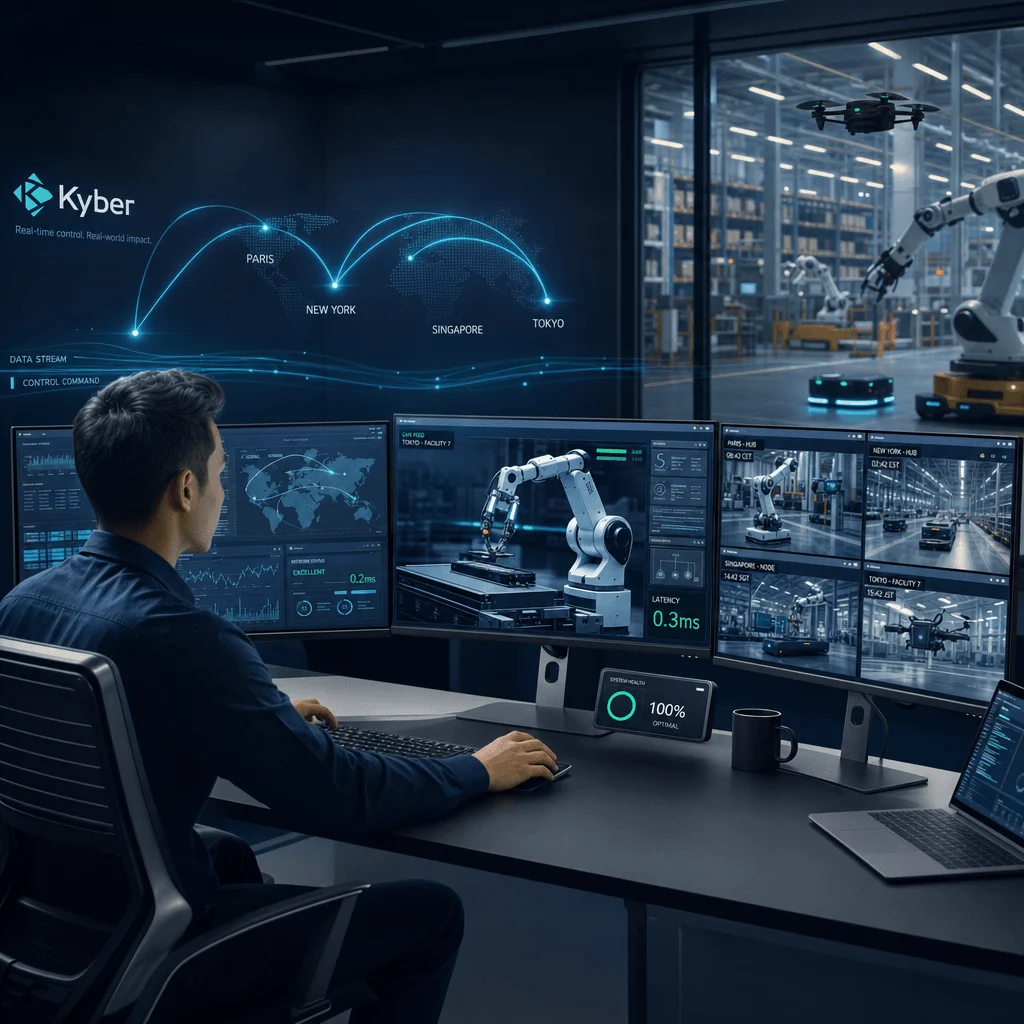
JustUpdateOnline.com – The visionary developer behind the world-renowned VLC media player is pivoting from digital video to the physical realm of automation. Jean-Baptiste Kempf, a prominent figure in the open-source community, has introduced a groundbreaking infrastructure designed to facilitate the real-time management and control of robotic systems.
This new technical foundation aims to address one of the most significant hurdles in modern robotics: the lack of a standardized, low-latency communication layer between software instructions and mechanical execution. By drawing on years of experience in handling complex data streams for media playback, the project seeks to provide a robust environment where machines can process commands with near-instantaneous precision.
The initiative focuses on creating a unified architecture that simplifies how developers interact with diverse robotic hardware. Currently, the industry is often hampered by fragmented systems that require bespoke coding for different components. This new framework proposes a more streamlined approach, allowing for smoother integration of sensors, actuators, and artificial intelligence modules.
One of the core objectives of this infrastructure is to minimize "lag" in robotic response times. In environments such as high-speed manufacturing or autonomous navigation, even a millisecond of delay can lead to operational failures. The new system is engineered to prioritize high-speed data throughput, ensuring that robots can react to their surroundings in real-time with high reliability.
Industry analysts believe that such a standardized control layer could democratize the field of robotics. By providing a reliable "plumbing" for data transmission, the project allows engineers to spend less time on basic connectivity issues and more time on high-level innovation. This shift could accelerate the development of everything from logistics drones to advanced medical assistance devices.
As automation becomes increasingly central to global industries, the move by a seasoned open-source pioneer into the robotics sector highlights a growing demand for transparent and efficient software solutions. This venture represents a significant step forward in making complex robotic orchestration as accessible and reliable as playing a video file.
