

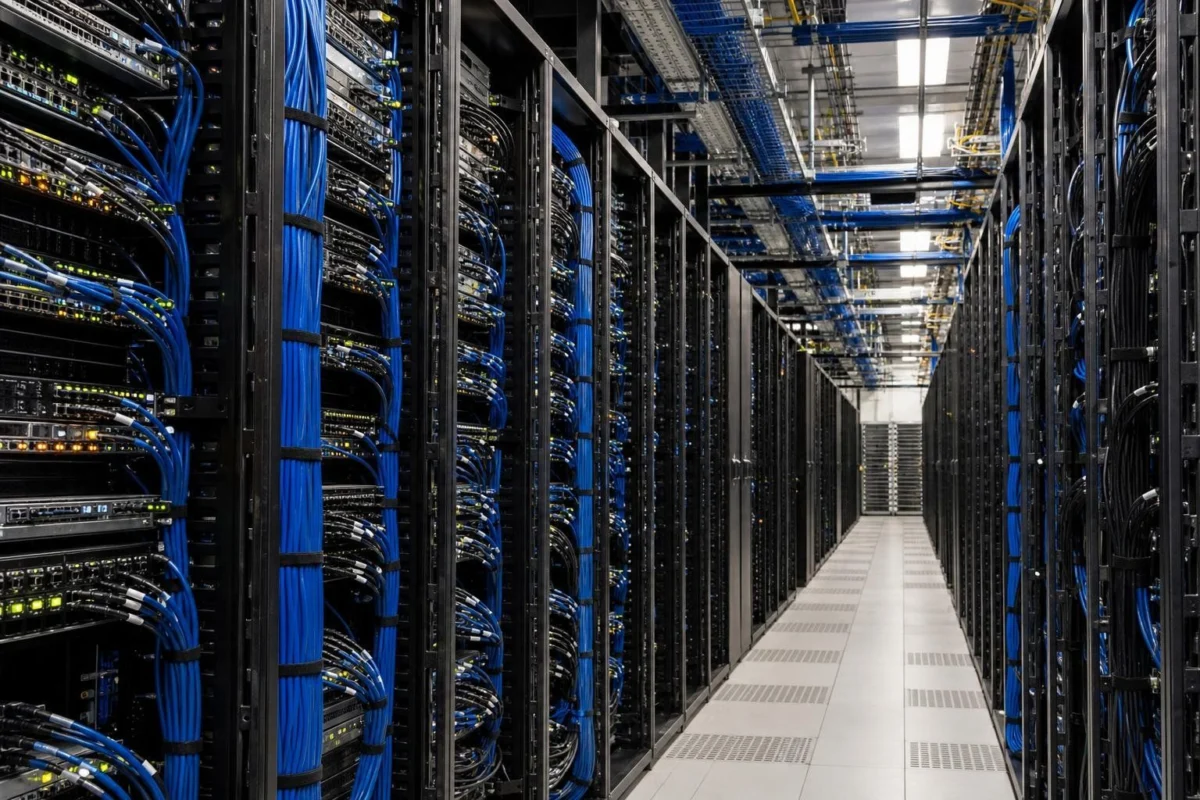
JustUpdateOnline.com – The rapid integration of generative artificial intelligence into every facet of the digital economy is beginning to reveal significant cracks in the physical infrastructure that supports the global web. While the public focuses on the capabilities of new software models, industry experts are increasingly concerned that the underlying hardware and utility grids are ill-equipped to handle the unprecedented strain of modern AI workloads.
For decades, the internet’s foundation was built to facilitate traditional data exchange—streaming, web browsing, and cloud storage. However, the computational intensity required to train and deploy large language models (LLMs) operates on a completely different scale. These processes require massive clusters of high-performance GPUs that consume electricity and generate heat at levels far exceeding those of standard server racks.
One of the primary points of failure is the aging electrical grid. In major tech hubs, the demand for power from new data centers is outstripping supply, leading to concerns about local energy stability. Many facilities are being forced to explore independent power solutions, such as on-site nuclear small modular reactors or massive battery arrays, as municipal grids struggle to keep pace with the 24/7 energy requirements of AI training cycles.
Beyond power, the physical design of data centers is undergoing a forced evolution. Legacy cooling systems, which rely largely on air circulation, are proving insufficient for the concentrated thermal output of AI-optimized chips. This has sparked a costly transition toward liquid cooling technologies and a specialized architectural shift that many older facilities simply cannot accommodate without a total overhaul.
The digital "plumbing" of the internet is also facing a bottleneck. The sheer volume of data being moved between decentralized storage and centralized processing hubs is testing the limits of fiber-optic networks and undersea cables. As AI becomes more ubiquitous, the need for low-latency, high-bandwidth connections is no longer a luxury but a fundamental requirement that the current backbone was never designed to provide at such a massive scale.
Industry analysts suggest that without a coordinated global investment in infrastructure, the "AI revolution" could be throttled by the very systems meant to support it. The transition from a traditional internet to an AI-first ecosystem requires more than just better algorithms; it necessitates a complete reimagining of how we build, power, and connect the physical world to the digital one.
