

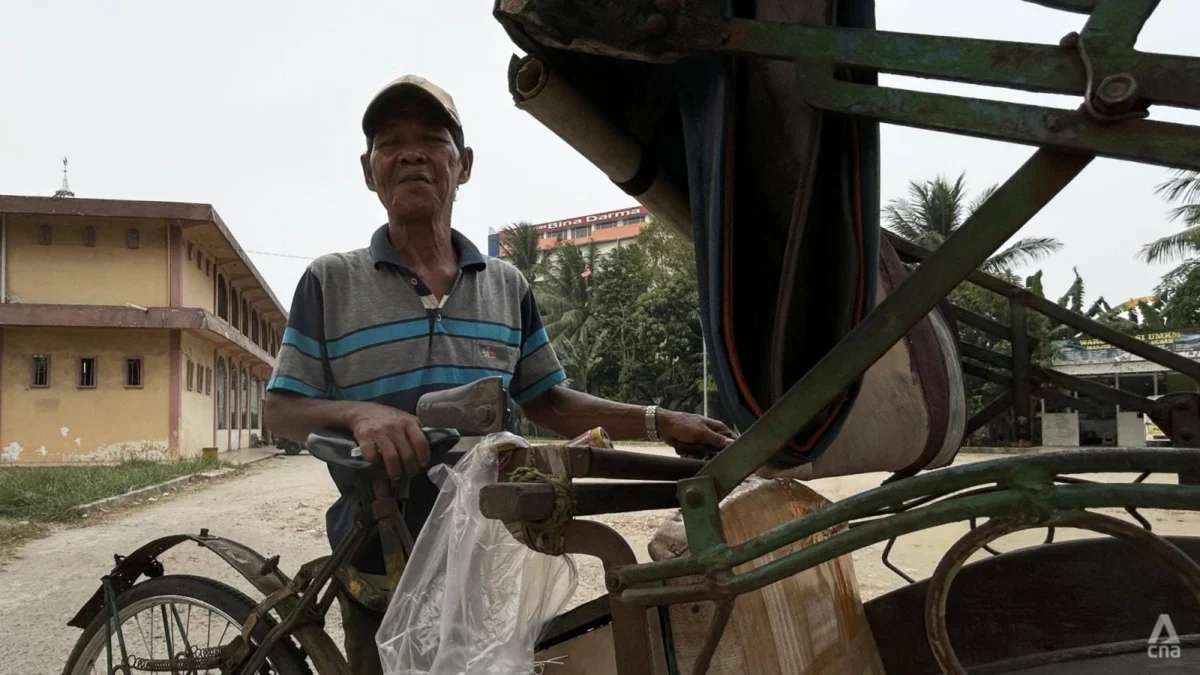
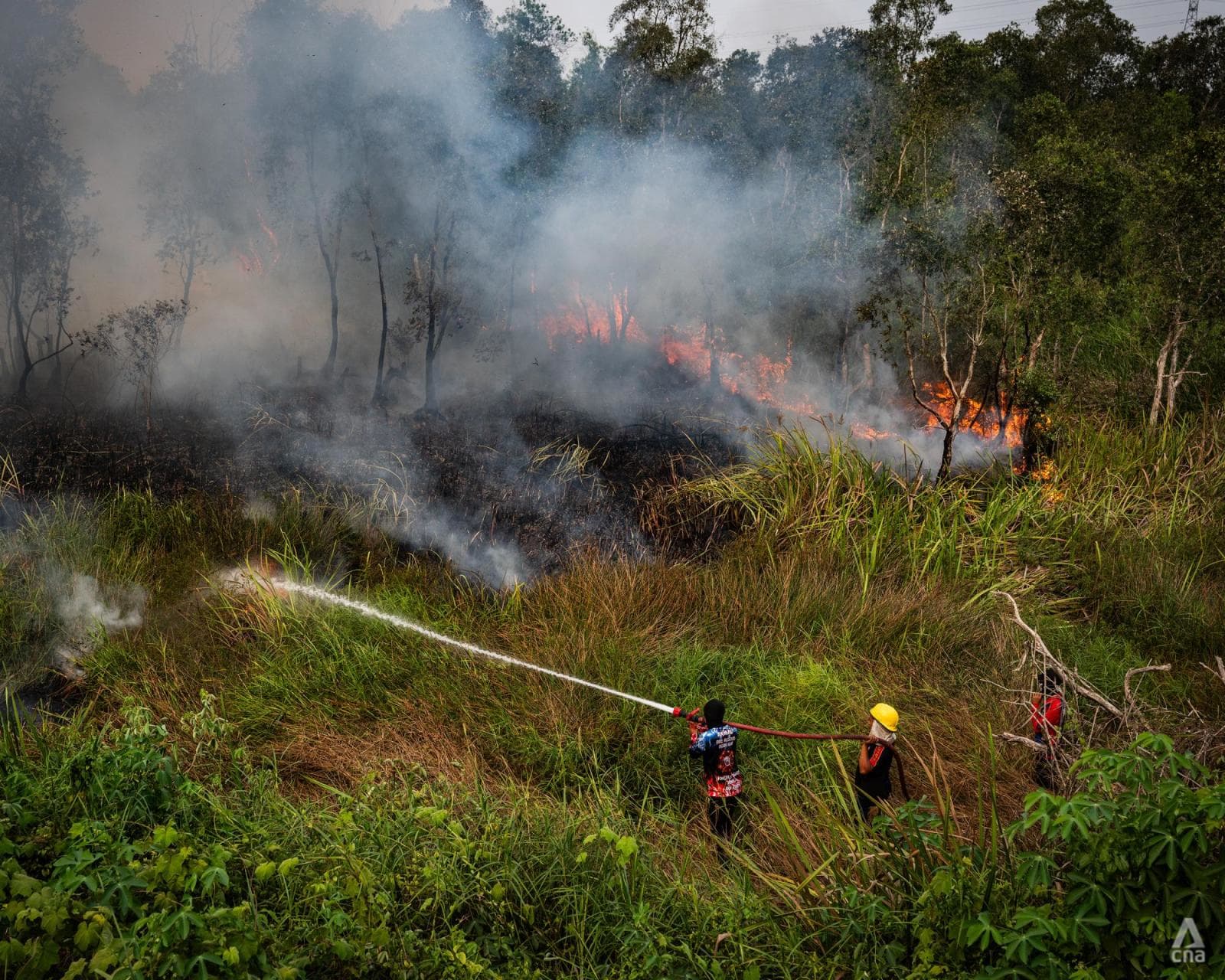
JustUpdateOnline.com – Palembang, The persistent shroud of thick smoke from land and forest fires (karhutla) continues to paralyze the daily lives of residents across Sumatra, forcing many into a desperate struggle for both their health and their income. As the air quality remains at dangerous levels, the economic pulse of cities like Palembang has slowed to a crawl, leaving vulnerable workers with few options but to wait for the rain.
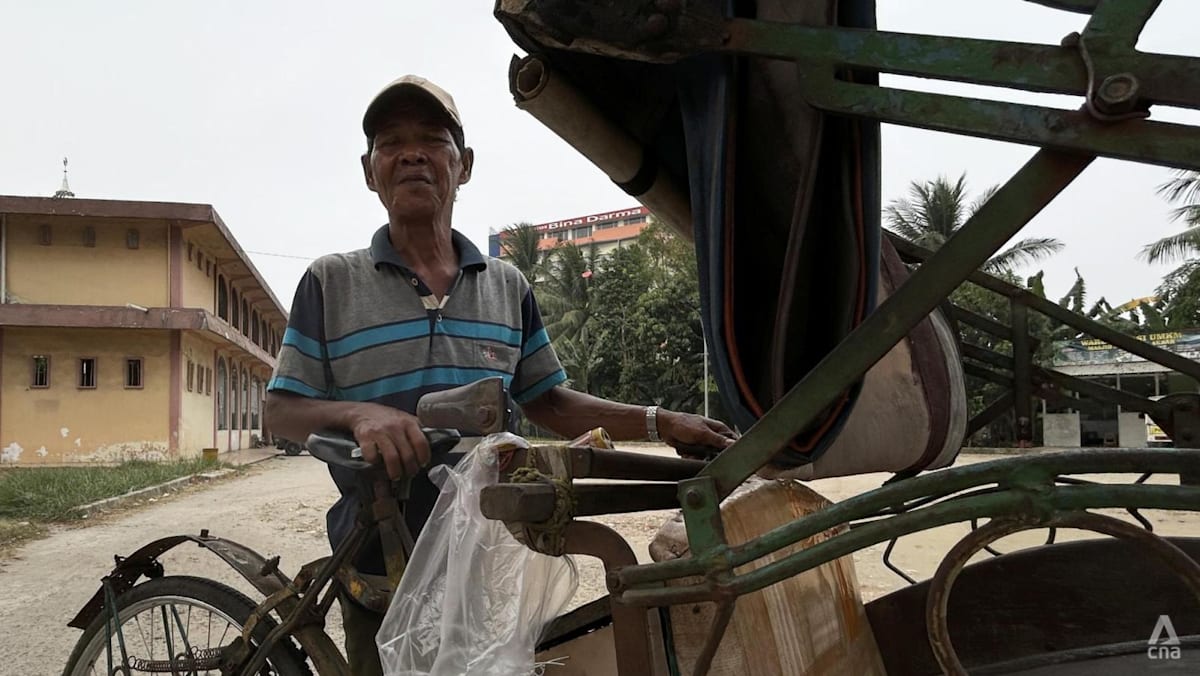
For 60-year-old Kholidi, a traditional rickshaw (becak) driver, the environmental crisis has translated into a direct threat to his survival. With local schools shuttered and once-bustling markets now deserted, his primary sources of income have vanished. The elderly driver noted that he has recently returned home without a single cent, a trend that appears likely to continue as long as the smog persists.
The scale of the disaster is immense. According to recent data from the Ministry of Forestry, nearly 6,000 hotspots were identified across Sumatra by mid-September, with more than 4,000 concentrated in South Sumatra alone. This toxic haze has not only blanketed the Indonesian archipelago but has also drifted across international borders, affecting neighboring Singapore, Malaysia, and the Philippines.
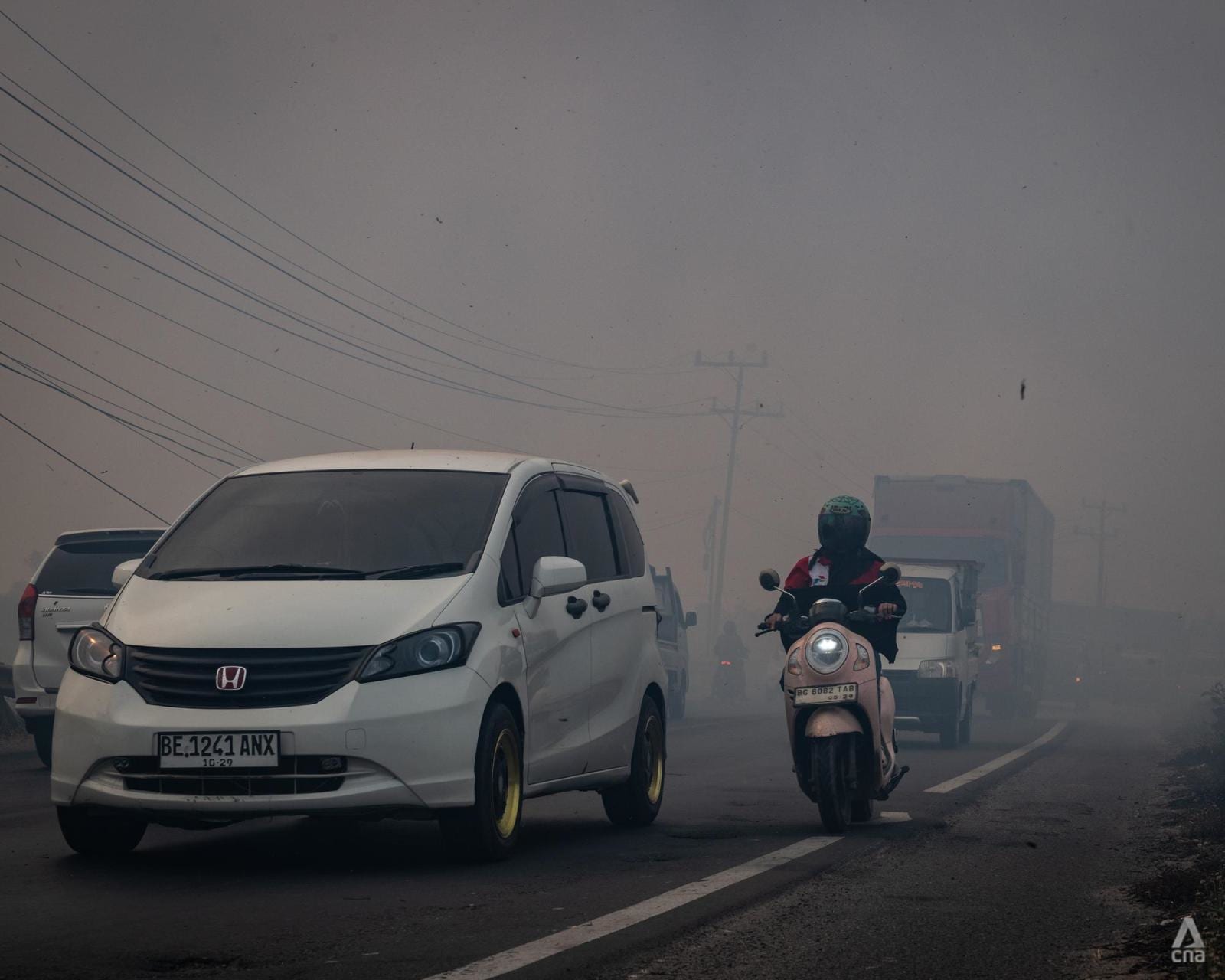
In Palembang, the Air Quality Index (AQI) has frequently fluctuated between 150 and 275. Under national standards, these figures represent "unhealthy" to "very unhealthy" conditions. The visibility has dropped so significantly in certain districts that authorities have been forced to close major roadways to prevent fatal traffic accidents.
A Growing Health and Economic Crisis
The human cost of the fires is mounting. Kholidi’s wife, Emi, is among the 110,000 Indonesians who have required medical intervention for respiratory ailments this year. The situation became so dire that Kholidi had to rush her to a clinic for emergency oxygen therapy after smoke began seeping into their home. To protect her, he has requested she stop her work as a street sweeper, leaving the family entirely dependent on his dwindling earnings.
The economic fallout extends far beyond individual households. The Center for Economic and Law Studies (Celios) estimates that the combined health and financial losses from this year’s fires could reach a staggering Rp123 trillion.
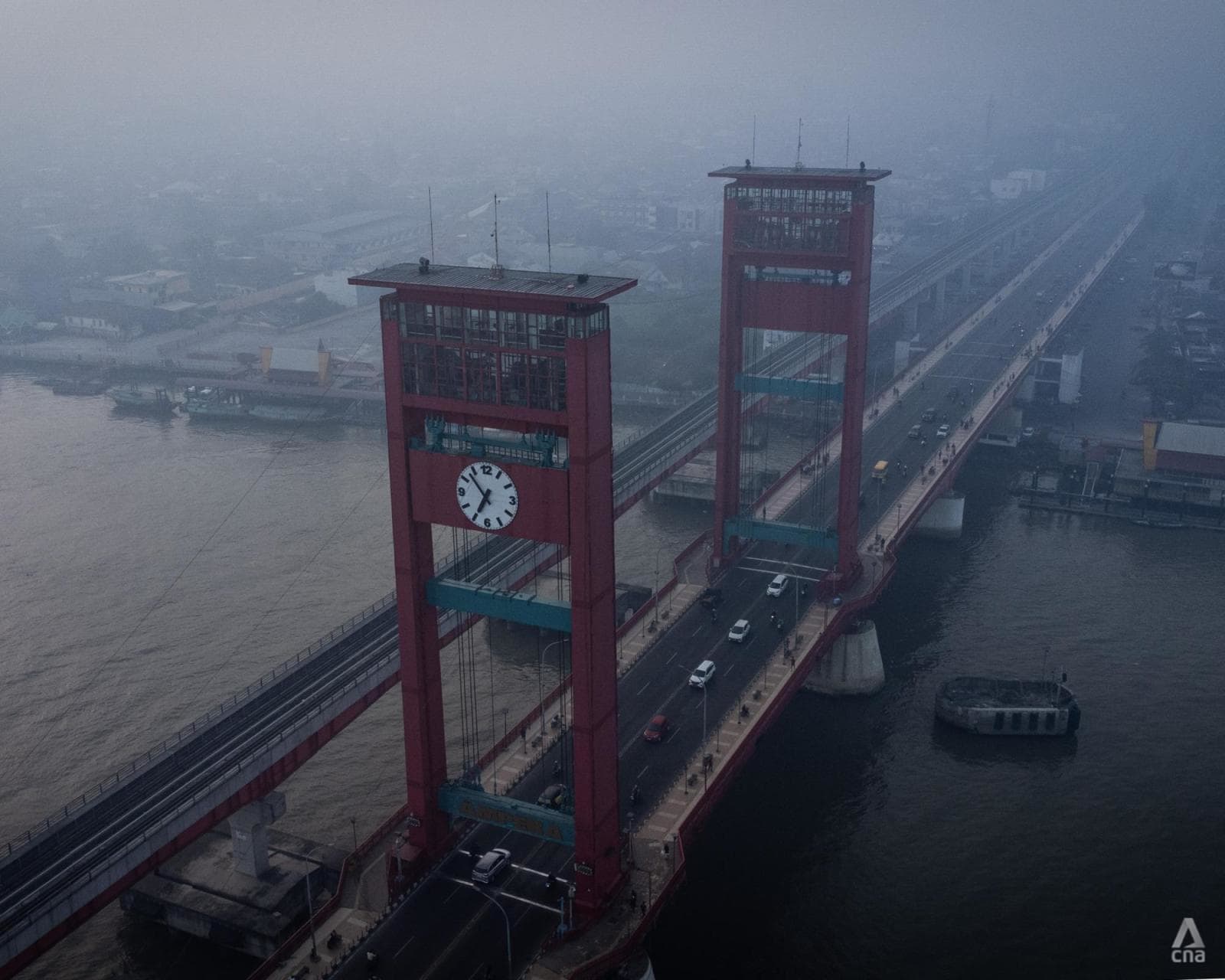
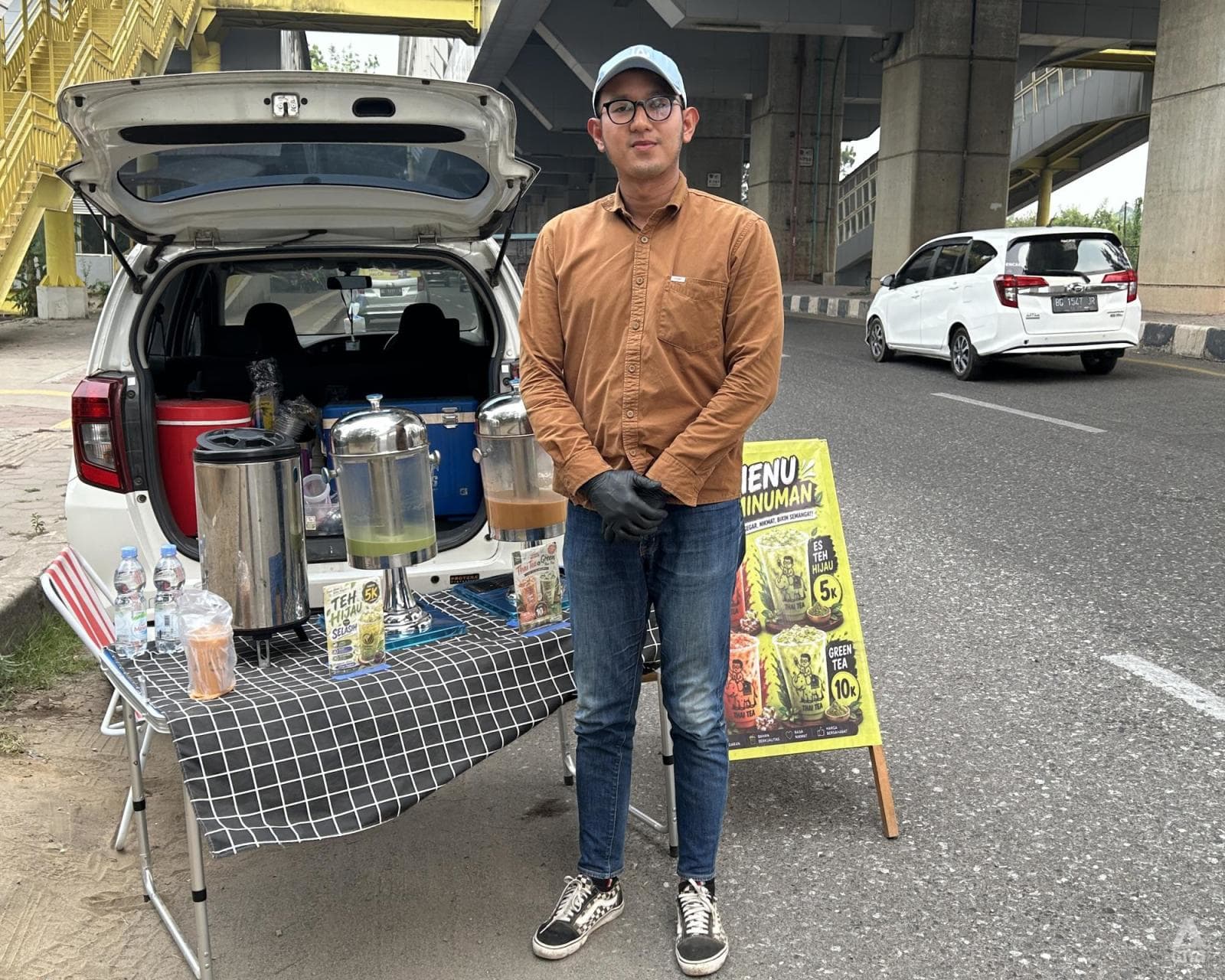
Small business owners are feeling the pinch. At the iconic Ampera Bridge night market, souvenir vendor Oktarina Pertiwi reported a massive drop in revenue. Previously earning around Rp4 million on a good night, she now struggles to reach even a quarter of that amount as tourists and locals avoid the hazardous outdoor air. Similarly, beverage sellers at the Jakabaring Sports Complex have seen their profits slashed in half as residents abandon their outdoor exercise routines.
Education and Future Outlook
The haze has also disrupted the educational sector. To protect children from the toxic atmosphere, over 1.4 million students across six provinces have transitioned to remote learning.
Forestry Minister Raja Juli Antoni has warned that the worst may not be over, as significant rainfall is not anticipated until early October. Scientists attribute the prolonged dry spell to a "super-El Niño" event, which may delay the monsoon season until December in many regions.
Government Intervention
In response to the crisis, the Ministry of Health has directed hospitals and community clinics to provide free respiratory treatment and oxygen to those affected. Additionally, the Ministry of Cooperatives and SMEs has designated over Rp618 billion to support more than 200,000 small businesses in disaster-stricken zones. However, specific timelines for the distribution of these funds to haze-affected vendors remain unconfirmed, as the government continues to process aid for earlier natural disasters in other regions.
For workers like Kholidi, the future remains uncertain. Unable to navigate his rickshaw through long, difficult routes at his age, he can only spend more hours on the street, hoping for a rare passenger. "I can only wait and pray for the smoke to clear," he said, "so that our lives can return to normal."
