


JustUpdateOnline.com – SHENZHEN, China’s tech hub is spearheading a transformative approach to the digital economy by exploring how information can be traded across international borders. A new partnership between a state-backed Chinese exchange and a Malaysian technology firm is setting the stage for a marketplace where data is treated with the same economic weight as land, labor, and capital.

The initiative stems from a growing realization in the tech sector: hardware is only half the battle. For instance, an autonomous cleaning robot perfected for the hallways of a Shenzhen office may struggle to navigate the unique architectural layouts and foot traffic patterns of a shopping mall in Kuala Lumpur. The missing link is not the machinery, but localized data required to train the artificial intelligence (AI) effectively for specific environments.
Data as a Modern Production Factor
In 2020, the Chinese government officially categorized data as a primary factor of production. Since then, the nation has established dozens of domestic data exchanges. Now, the focus is shifting toward international expansion.

A Memorandum of Understanding (MoU) signed on May 22 between the Shenzhen Data Exchange (SZDEX) and Malaysia’s Zetrix AI marks a significant step in this direction. The two entities are working to build a bridge between the data markets of China and the ASEAN region. Wong Thean Soon, the managing director of Zetrix AI Group, likened the concept to a financial market, describing it as a "stock exchange" where the primary asset is information rather than shares.
Selling Insights, Not Raw Information
Experts clarify that "data trading" rarely involves the bulk transfer of raw, sensitive databases. Instead, the market focuses on "data products"—processed insights, analytics, and access rights.
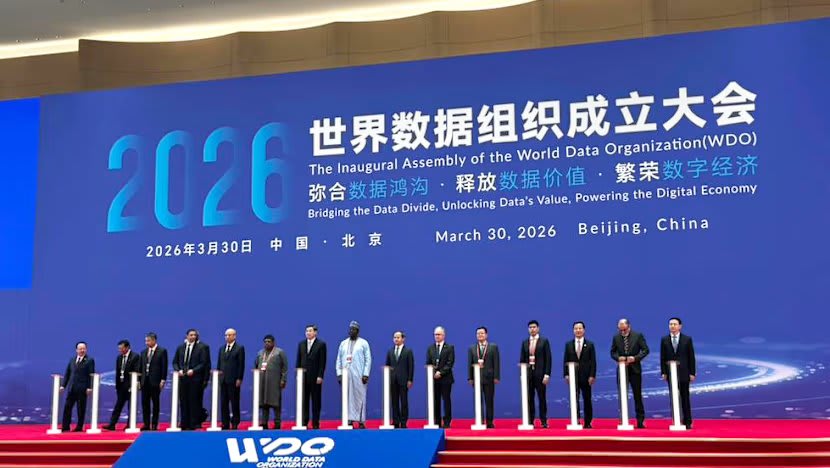
According to SZDEX officials, the process is governed by rigorous compliance checks. A company looking to enter a new market might pay for an analytical report on consumer behavior or local infrastructure without ever seeing the raw data used to generate those insights. For example, a Malaysian logistics provider might license its route optimization patterns to a Chinese manufacturer to help streamline supply chains, while maintaining full ownership of its primary database.
Fueling the AI Revolution
The surge in Large Language Models (LLMs) and humanoid robotics has created an insatiable demand for high-quality, diverse data. While China leads in AI development, its models require "out-of-country" information—such as local dialects, cultural nuances, and specific industry habits—to remain competitive globally.

Alex Capri, a senior lecturer at the National University of Singapore Business School, noted that data is a "non-expendable commodity." Unlike traditional resources, the value of data can be extracted repeatedly through different computational lenses, making it a cornerstone of long-term economic strategy.
Overcoming Trust and Regulatory Barriers
Despite the economic potential, the path forward is fraught with complexity. Unlike currency or physical goods, there is no global consensus on how to value data or ensure its safe passage through different legal jurisdictions.
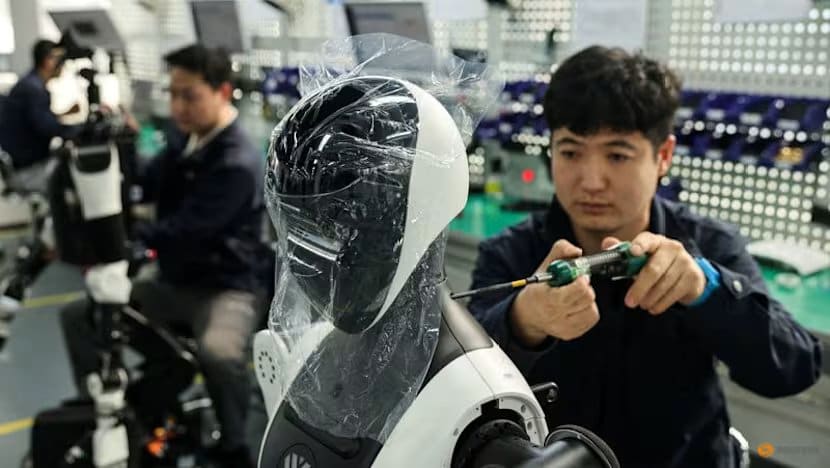
Bryan Ng, CEO of WITO Technology—the first Malaysian firm to provide data to the Shenzhen exchange—noted that many businesses are initially hesitant. Companies often fear that their private information is being "sold" or exposed. Addressing these concerns requires a shift in perspective, moving from a fear of data loss to an understanding of data’s economic utility through secure, vetted platforms.
SZDEX is currently collaborating with partners in eight different regions to develop these regulatory frameworks, including joint efforts with Singapore to establish cross-border exchange guidelines.

A Long-Term Vision for ASEAN
The partnership aims to position Southeast Asia as a proactive hub for the digital economy rather than a mere consumer of foreign technology. However, the transition from an experimental pilot to a fully functional regional platform will take time.
Zetrix AI expects to begin a trial phase within the next 12 to 18 months, focusing on building the technical infrastructure and legal standards necessary to facilitate trust. Analysts suggest that the ultimate success of this "data stock market" will depend on political accountability and the ability of stakeholders to prove that sharing information provides a tangible commercial advantage without compromising privacy.
