

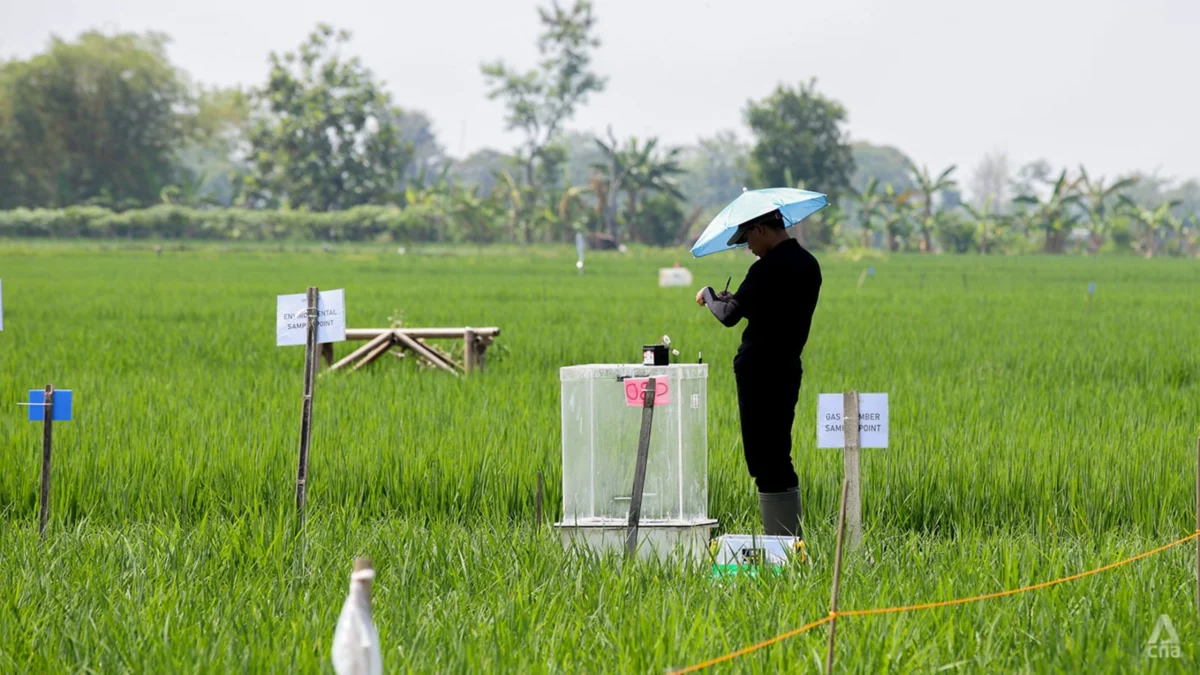
JustUpdateOnline.com – Grobogan, Central Java. A pioneering agricultural initiative led by a Singaporean laboratory is reshaping the future of rice farming in Indonesia. By introducing eco-friendly cultivation techniques, researchers are successfully increasing crop volumes while simultaneously lowering the environmental footprint of one of the world’s most essential food staples.
The "Decarbonising Rice Project," spearheaded by the Temasek Life Sciences Laboratory (TLL), is currently undergoing large-scale trials in Indonesia, Laos, and India. The program aims to modernize traditional farming practices that have remained largely unchanged for generations.
A Shift in Tradition
For decades, farmers in regions like Grobogan have relied on "ancestral methods," primarily keeping paddy fields constantly flooded from planting until harvest. While effective for weed control, this practice creates an oxygen-poor environment in the soil, allowing microbes to produce significant amounts of methane—a greenhouse gas roughly 30 times more potent than carbon dioxide.
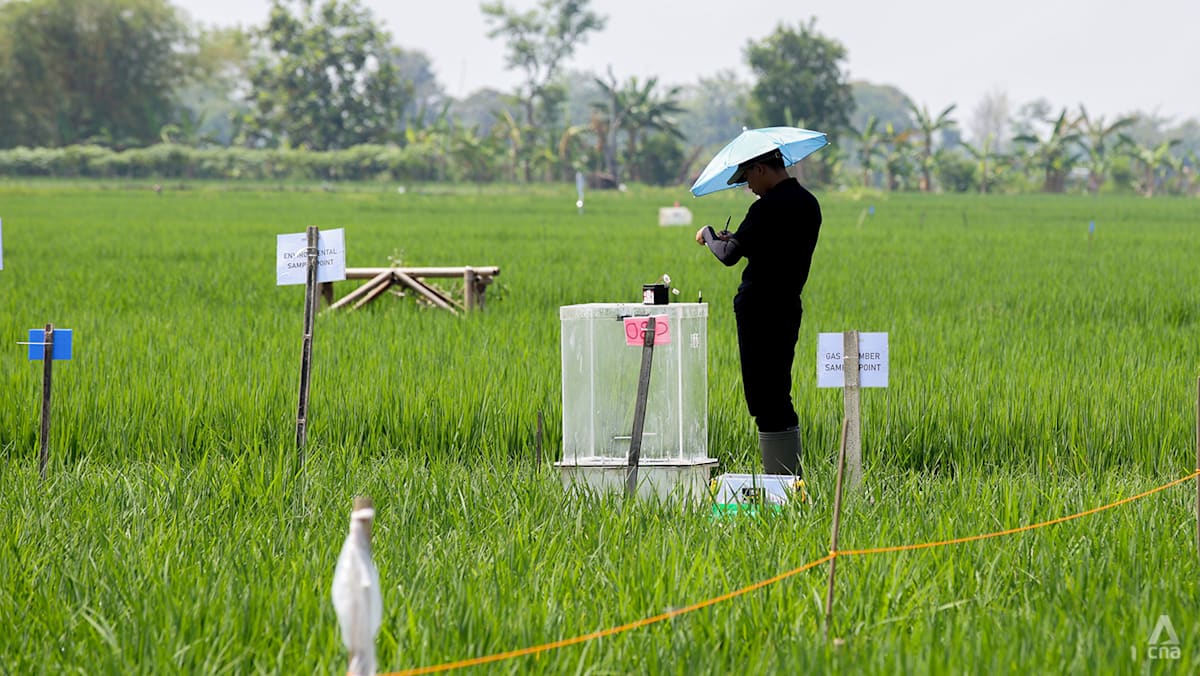
Kasno, a 55-year-old local farmer, is among the 170 participants who recently pivoted to a new strategy. Under the guidance of TLL and local partners, these farmers adopted the Alternate Wetting and Drying (AWD) irrigation method. This technique involves periodic flooding rather than permanent submergence, significantly reducing water usage and methane output.
"In the past, one hectare typically yielded six or seven tons," Kasno observed. "With this new approach, we are seeing harvests reach eight or nine tons."
Scientific Solutions for Global Challenges
Rice production is responsible for approximately 8% of all human-related methane emissions globally. As demand for rice is projected to rise by 30% by 2050, finding sustainable production methods has become a critical priority for food security and climate goals.
The TLL team, led by CEO Peter Chia and senior investigator Dr. Ramachandran Srinivasan, focuses on a holistic "package" of solutions. This includes:
- Climate-Resilient Seeds: Utilizing varieties that can withstand erratic weather patterns.
- Root Genetics: Selecting rice strains with root systems that naturally suppress methane-producing bacteria.
- Tailored Nutrition: Using specialized fertilizer blends enriched with micronutrients to maximize plant health.
While the environmental benefits are substantial—with greenhouse gas emissions and water consumption dropping by nearly a third across trial sites—the project leaders emphasize that the primary motivation is the farmers’ welfare. By reducing the need for expensive inputs like excessive water and fertilizer, farmers can increase their profit margins.
Regional Impact and Economic Future
The results of the trials have been promising across the board. While Indonesia saw a 6% increase in yield, India recorded a 10% rise, and Laos experienced a staggering 25% boost.
One of the biggest hurdles remains the cost of implementation. While advanced drip irrigation can cut emissions by up to 86%, it costs approximately $10,000 per hectare. In contrast, the AWD method used in these trials costs only about $10 per hectare, making it a much more viable option for small-scale farmers.
Looking ahead, the project aims to scale up significantly, with a long-term goal of producing one million tons of "climate-friendly" rice. There are also plans to link these sustainable practices to carbon credit platforms. According to Dr. Sheetal Sharma of the agritech firm Rize, up to 70% of the revenue generated from these carbon credits could eventually be funneled back to the farmers, providing a new stream of income.

As the program enters its next phase, the success in Grobogan serves as a blueprint for how biotechnology and grassroots cooperation can create a more resilient and sustainable regional food system.
