

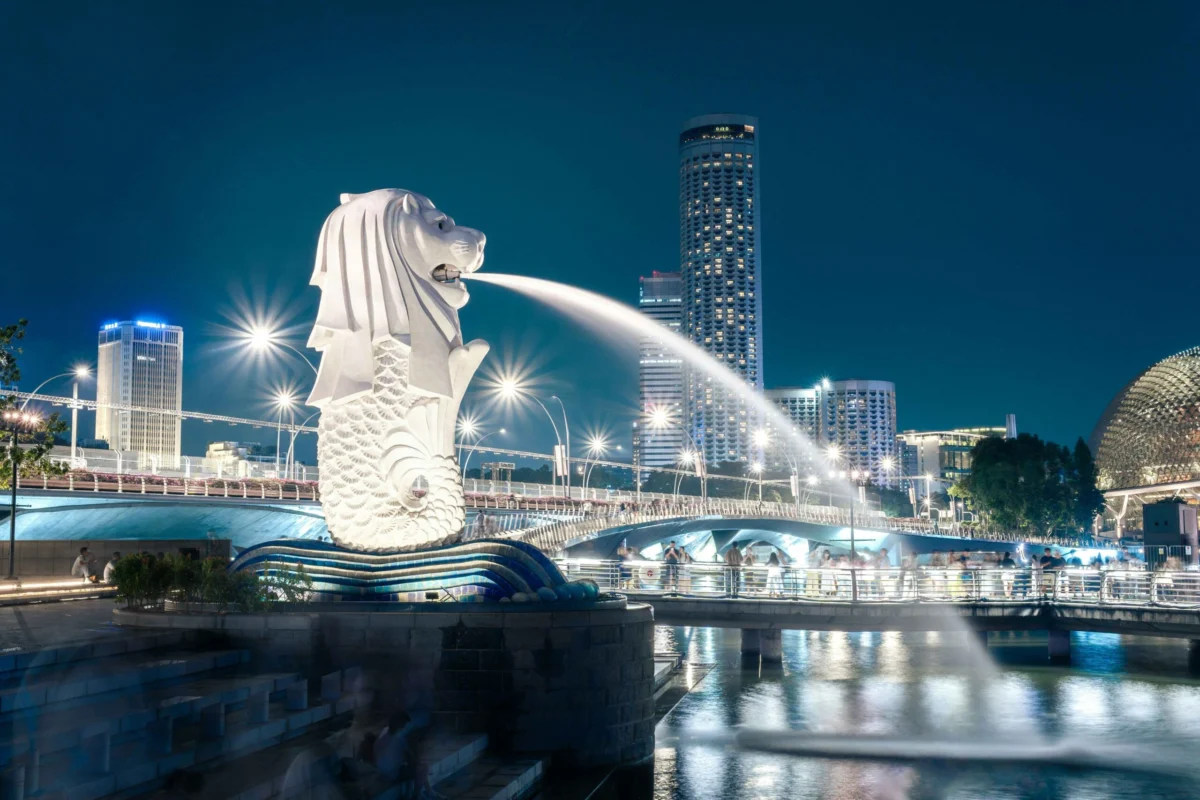
JustUpdateOnline.com – Singapore has transitioned from merely testing artificial intelligence to embedding it into the very fabric of its economy, outpacing much of the global community in digital transformation. While many nations are still in the experimental phase, the city-state has integrated AI into its core infrastructure at a speed that is fundamentally changing the corporate landscape.
Recent industry data reveals that 21 percent of organizations in Singapore have reached an "advanced" level of AI maturity. At this stage, AI is no longer a peripheral tool but serves as a primary teammate or a vital component of daily operations. This figure significantly exceeds the global benchmark of 12 percent, suggesting that Singapore is operating on a different trajectory than most other economies.
This rapid adoption is largely driven by a top-down approach. Approximately 90 percent of local business leaders acknowledge that government directives heavily influence their AI roadmaps. The motivation is clear: nearly half of the workforce reports saving more than an hour of work each day through automation. In an economy where productivity is a primary metric of success, these gains have become a vital competitive advantage.
However, the breakneck speed of implementation has introduced significant risks. Experts warn that companies are integrating powerful AI systems into their workflows faster than they can establish the necessary security protocols. Currently, 97 percent of Singaporean firms have either piloted or fully deployed AI, yet four out of five organizations have already reported facing at least one AI-related security threat in the last year.
A major point of concern is the lack of oversight. Only about half of the organizations in the region actively monitor how AI tools are accessed or what data they produce. This lack of visibility has led to tangible consequences, with 40 percent of firms reporting that employees accidentally leaked sensitive corporate information onto public platforms via generative AI tools.
Cybercriminals are also evolving. AI-generated phishing attacks and sophisticated impersonation schemes have affected 46 percent of local businesses, with the financial services sector seeing a spike to 62 percent. These attackers use the same technology to create more convincing, grammatically correct, and perfectly timed fraudulent communications.
The risk extends deep into the technical architecture of these companies. Research indicates that roughly 20 percent of AI identities within cloud environments are "overprivileged," possessing far more access than required for their tasks. When AI acts as an access layer to sensitive data, it can inadvertently become a gateway for hackers. This is particularly dangerous in environments where 65 percent of organizations fail to rotate old credentials and 86 percent utilize third-party code with known vulnerabilities.
Looking ahead, the security landscape is expected to become even more complex. Analysts predict that by 2029, more than 50 percent of successful breaches on autonomous AI agents will stem from exploited access controls and prompt injection. Consequently, global spending on AI security is forecasted to reach nearly US$4.8 billion by 2027.
While Singapore’s lead in the AI race is undeniable, the focus must now shift toward sustainable governance. For the 79 percent of local firms still in the early stages of adoption, the transition to autonomous systems will require more than just new software; it will require a rigorous framework to define what AI can touch and what actions it can take without human intervention. The ultimate test for Singaporean enterprises will be their ability to secure this new infrastructure as effectively as they deployed it.
