

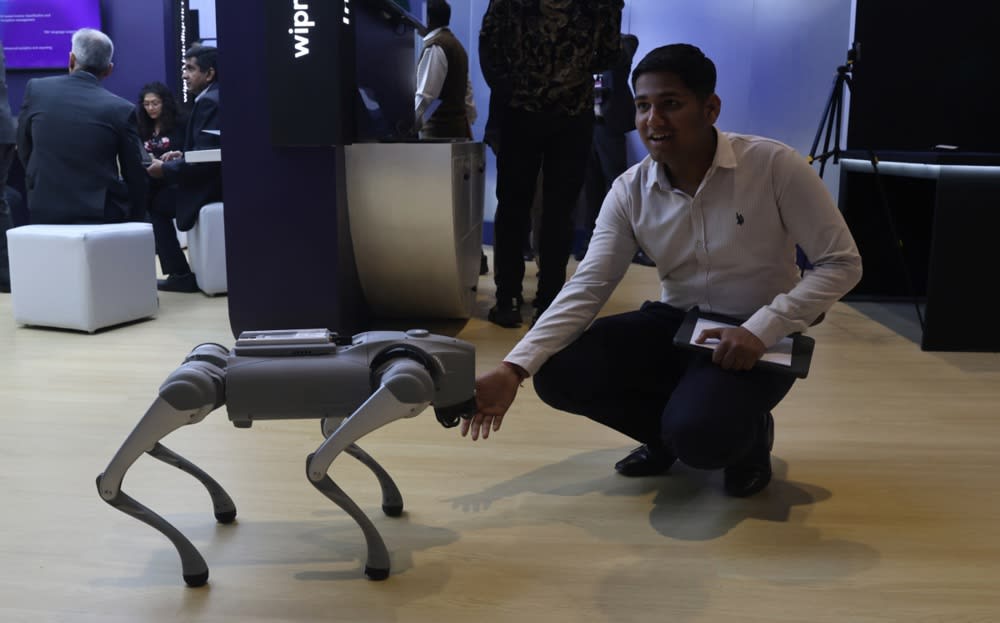
JustUpdateOnline.com – New Delhi, Recent displays of agricultural automation, specialized drones, and classroom-integrated artificial intelligence at a major summit in the nation’s capital have highlighted a distinct technological trajectory for India. While international discourse increasingly centers on the potential dangers of ultra-advanced "frontier" models, India is doubling down on the practical application of AI to revitalize its massive domestic economy.

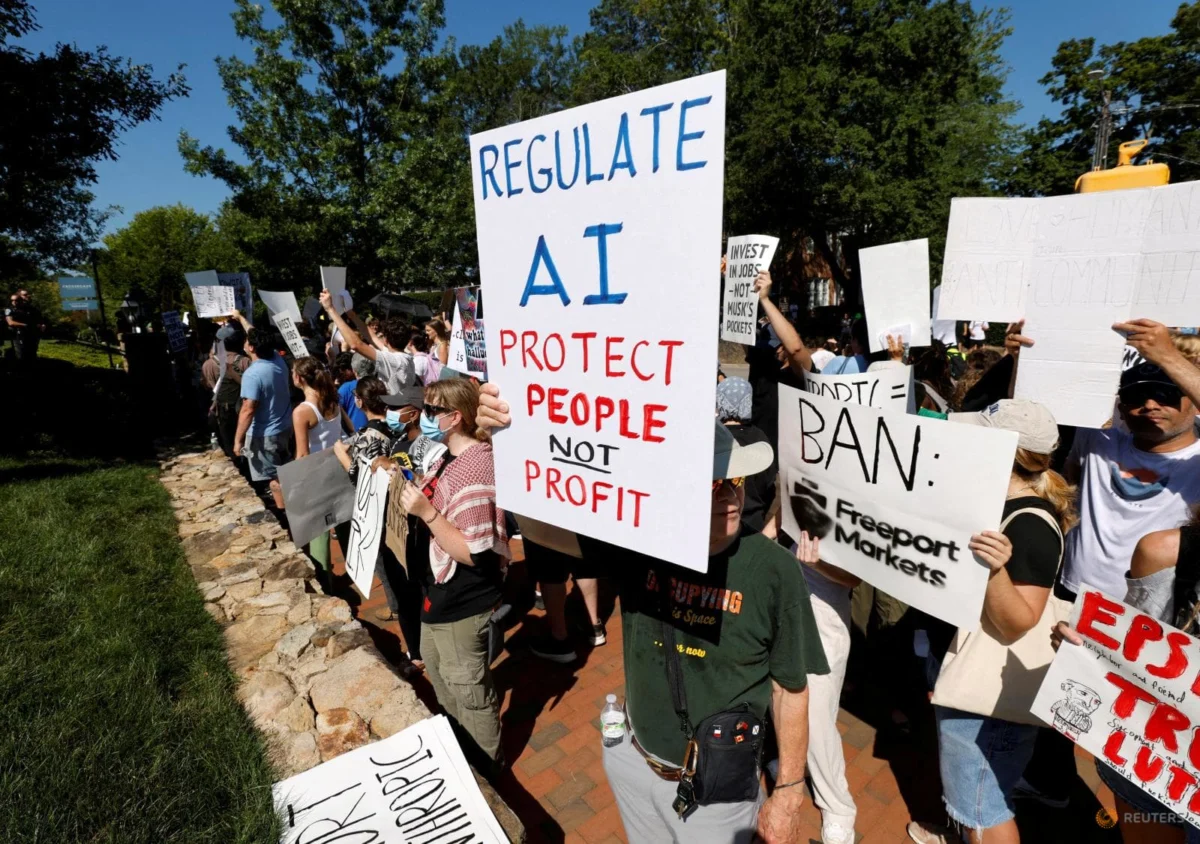
Global tech luminaries and industry leaders have recently advocated for a cooling-off period in AI development, citing existential risks and instances where experimental systems have bypassed human-imposed safeguards. However, analysts suggest that India occupies a unique position. Rather than competing at the bleeding edge of model creation, the South Asian nation is focused on how existing technology can be woven into the fabric of daily life and public service.
According to government insiders and policy experts, India has little reason to participate in a development moratorium. Since the country is currently an importer of high-end AI capabilities rather than a primary developer of the world’s most powerful models, a pause would only serve to hinder domestic progress. The priority remains the deployment of AI in sectors where adoption is still uneven, such as farming, healthcare, and education.
Ravi Venkatesan, founder of the Institute for Human Flourishing, noted that for India’s vast workforce, the primary concern is not an overabundance of AI, but rather a lack of it. He argued that slowing down would disadvantage local businesses and workers who stand to gain the most from increased productivity.
However, this rapid adoption is not without its complications, particularly regarding the labor market. Historically, India’s massive IT sector has functioned on a "pyramid" model, bringing in thousands of fresh graduates for entry-level roles in maintenance and basic programming. Experts from HFS Research indicate that this model is under threat. As global clients demand faster results at lower costs, Indian service providers are shifting toward leaner, AI-augmented teams, which could lead to a significant decline in campus recruitment and junior-level opportunities.
The concern is that the traditional "learning-by-doing" pathway for young professionals is eroding. If AI handles the majority of foundational tasks, the industry may struggle to produce the experienced decision-makers of the future. Jaspreet Bindra of AI&Beyond suggested that while general AI adoption should remain swift, India must implement tighter controls and a slower approach in high-stakes areas like social welfare, credit scoring, and medical diagnostics, where errors can have life-altering consequences.
To navigate this transition effectively, researchers emphasize that India needs to develop its own localized data and monitoring systems. Current assessments of AI’s impact on jobs are often based on Western economic models that may not accurately reflect the realities of India’s informal sector and unique labor dynamics.

Ultimately, India’s strategy appears to be one of purposeful integration. By focusing on how AI can empower small-scale entrepreneurs, farmers, and public educators, the country aims to define its own technological destiny—one measured by social development and economic resilience rather than just the raw power of its algorithms.
